
How to Plan a Morocco Road Trip: 7 Simple Steps
Planning a Morocco road trip? Follow this step-by-step guide to routes, budget, bookings, and packing for a smooth self-drive adventure.
Table of Contents
There’s a moment on every Morocco road trip when the highway just ends not literally, but in spirit. One minute you’re cruising past red-earth villages and roadside orange stands, and the next you’re winding through a mountain pass with snow-capped peaks on one side and a valley of palm groves on the other. That’s the thing about driving through Morocco: the country changes character every couple of hours, and having your own car is the only way to catch all of it.
This guide walks you through everything you need to plan a Morocco road trip from scratch dates, route, budget, bookings, itinerary, packing, and the final checks before you pull out of the rental lot.
How to Plan a Morocco Road Trip
Planning a Morocco road trip isn’t complicated, but it does reward a bit of structure. Morocco is bigger and more geographically varied than most first-time visitors expect a two-hour drive can take you from coastal fog to desert heat so the planning steps below are built around that reality: lock your route first, then layer in budget, bookings, and day-by-day logistics.
Step 1: Choose Your Morocco Road Trip Dates and Route
Decide How Many Days You Have
Your timeline decides everything else. A rushed 5-day loop out of Marrakech will look completely different from a leisurely 14-day route that includes the Sahara and the coast. As a rough benchmark:
- 5–7 days: One region done well (e.g., Marrakech, Atlas Mountains, and a taste of the desert)
- 10–12 days: A full classic loop (Marrakech–Atlas–Sahara–Fes–coast)
- 14+ days: The classic loop plus slower days, detours, and a proper coastal stretch
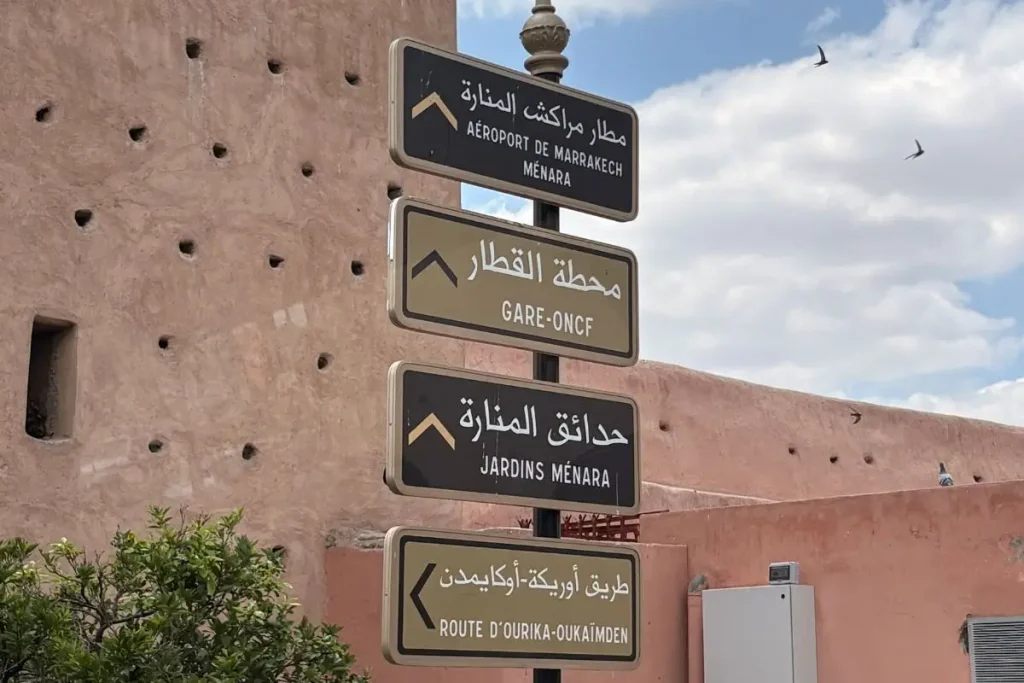
Be honest about how much driving you actually want to do each day. Morocco’s roads are good, but distances between highlights are often longer than the map suggests once you factor in mountain switchbacks.
Choose Your Start and End Cities
Most road trips begin in Marrakech or Casablanca, since both have major international airports and easy rental car pickup. From there, common endpoints include:
- Fes ideal if you want to end in the medina-and-history part of the country
- Marrakech (round trip) simplest logistically, no drop-off fees
- Tangier good if you’re continuing on to Spain or Europe afterward
Decide Between a One-Way or Round-Trip Route
A one-way route (e.g., Marrakech to Fes) lets you cover more ground without backtracking, but most rental companies charge a one-way drop-off fee, sometimes a significant one. A round-trip route starting and ending in the same city is usually cheaper and simpler, and Morocco’s geography actually lends itself well to loops you can shape a circuit that touches mountains, desert, and coast without much retracing of your steps.
Step 2: Build Your Morocco Road Trip Route
Choose Your Main Stops
Build your route around 4–6 anchor destinations rather than trying to see everything. A well-loved combination for a classic loop includes:
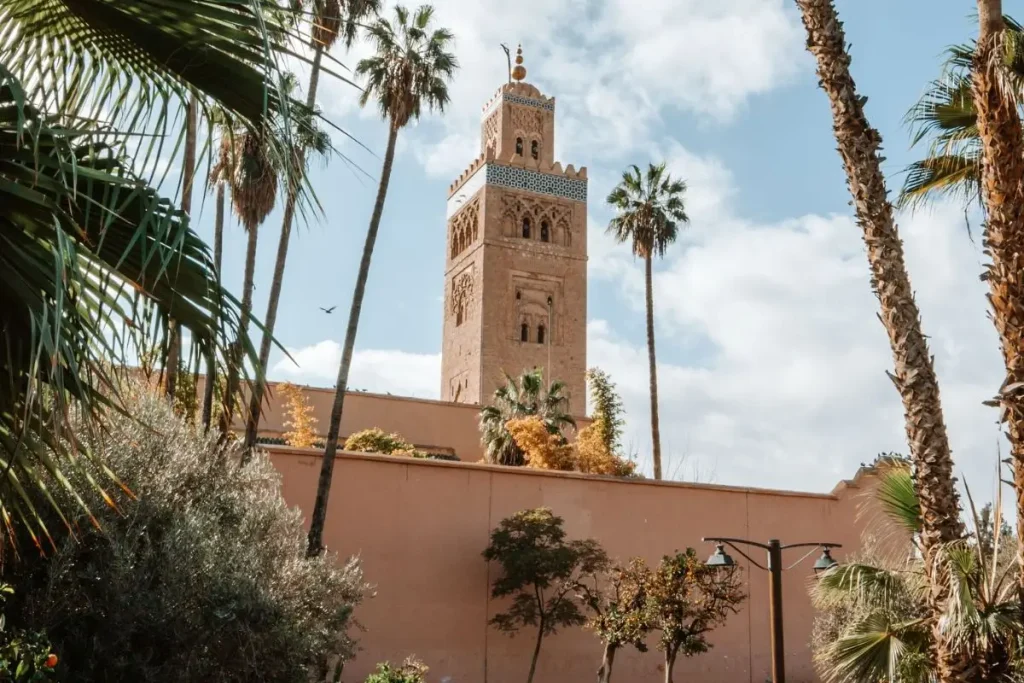
Marrakech (markets, medina, home base energy)
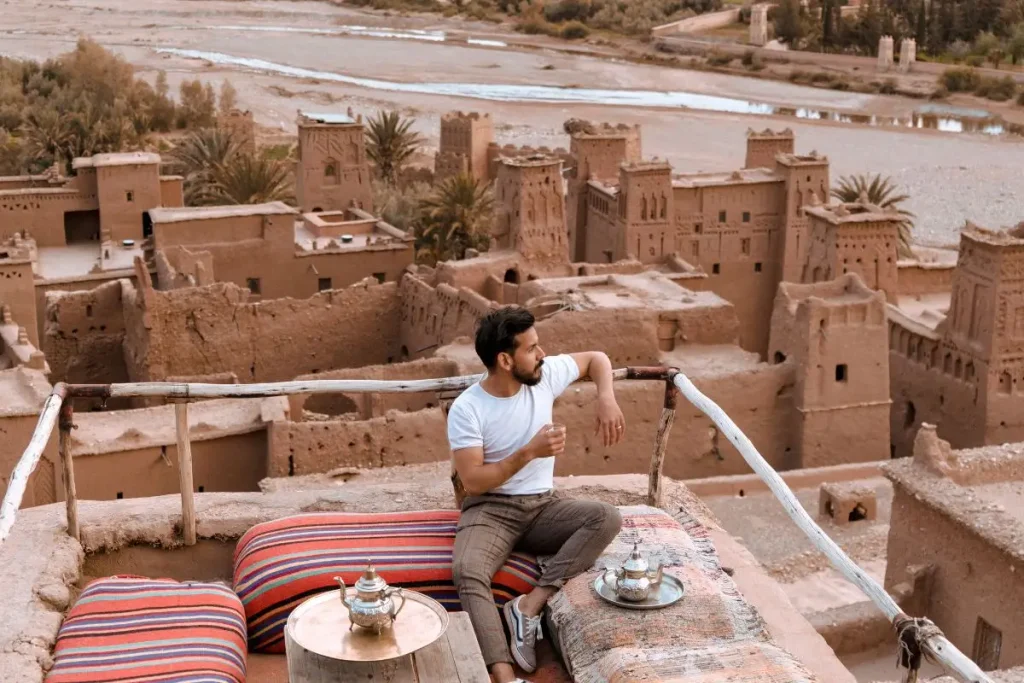
Ait Benhaddou (the famous kasbah, easy detour from the Atlas route)
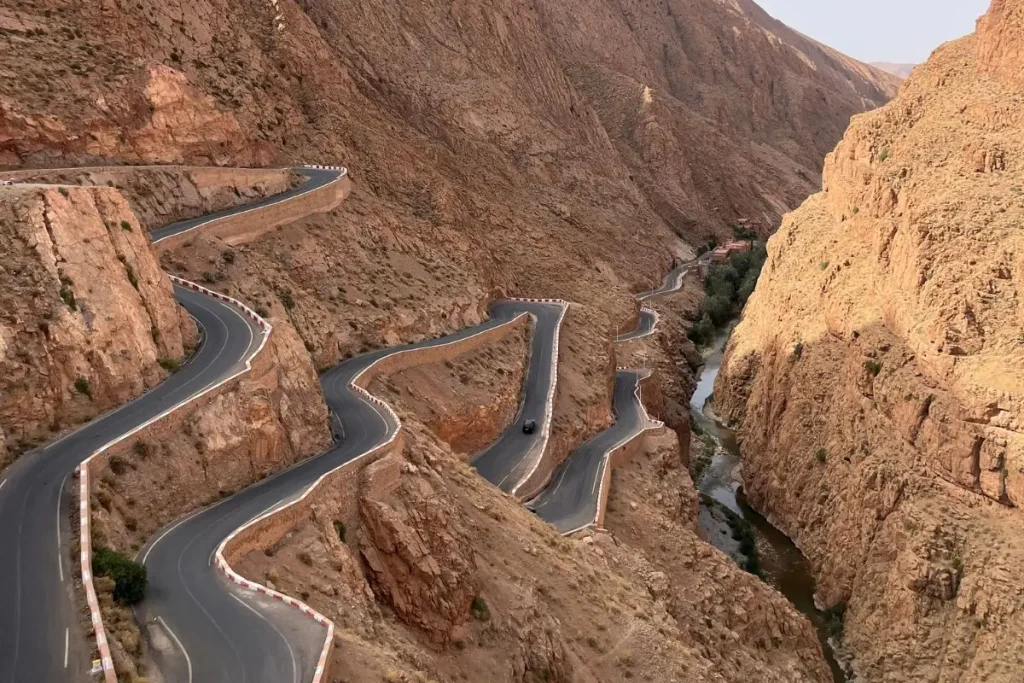
Dades or Todra Gorge (dramatic canyon driving)
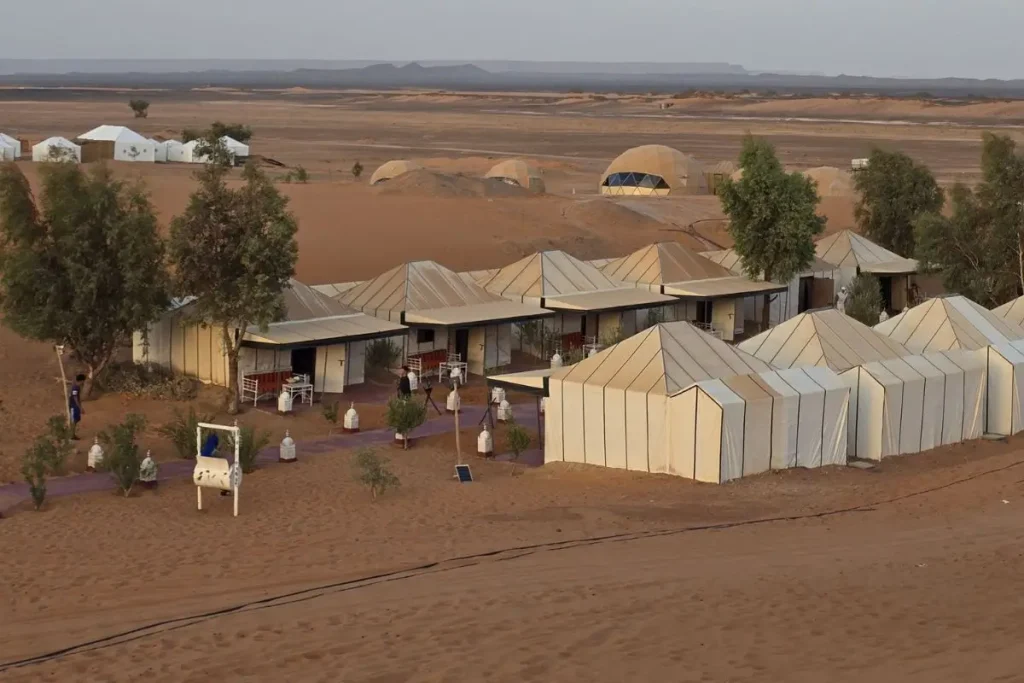
Merzouga (Sahara dunes, overnight desert camp)
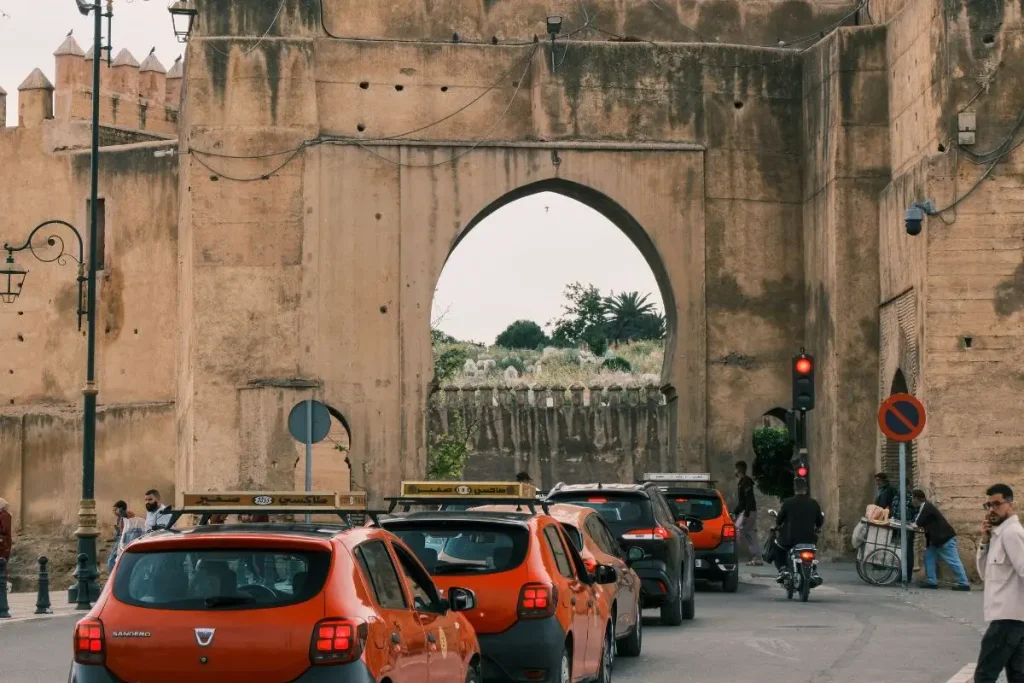
Fes (the most intact medieval medina in the country)
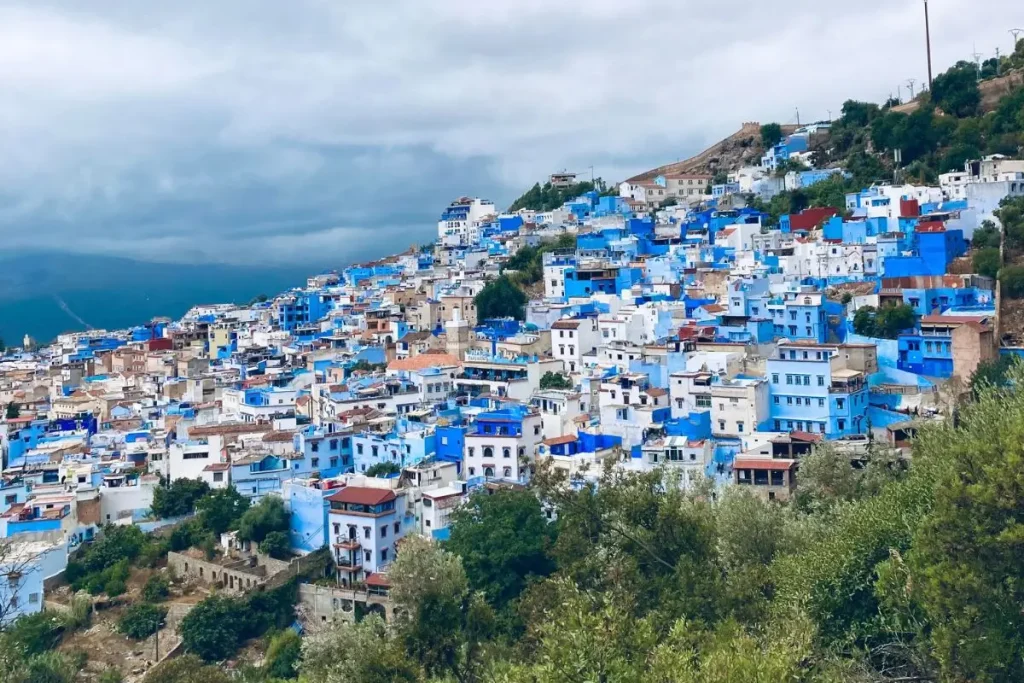
Chefchaouen (the blue city, if your route allows the extra days)
Plan Realistic Driving Days
A general rule for Morocco: don’t schedule more than 4–5 hours of actual driving per day if you also want time to stop, explore, and not arrive exhausted. Mountain roads through the Atlas and Dades/Todra region are slower than the kilometers suggest count on averaging 50–60 km/h on the winding sections, even though the road quality itself is generally solid.
Add Scenic Stops Along the Way
The drives themselves are often the highlight, so build in stops rather than treating the road as a transit line:
- Tizi n’Tichka Pass the main Atlas Mountains crossing between Marrakech and the south
- Roadside Berber villages worth 15-minute wanders even without a specific itinerary
- Dades Valley viewpoints pull-offs with some of the best canyon views in the country
Step 3: Plan Your Morocco Road Trip Budget
Rental Car and Fuel Costs
A standard rental car in Morocco typically runs $25–$45 USD per day for a compact or mid-size vehicle, with SUVs costing more useful if your route includes unpaved desert tracks. Fuel is relatively affordable by European standards; budget roughly $10–$15 USD per 100 km depending on your vehicle and current fuel prices.
Accommodation and Food
Morocco offers excellent value across budget tiers:
- Budget riads/guesthouses: $20–$40/night
- Mid-range riads with character: $50–$90/night
- Desert camps (Merzouga): $40–$120/night depending on comfort level
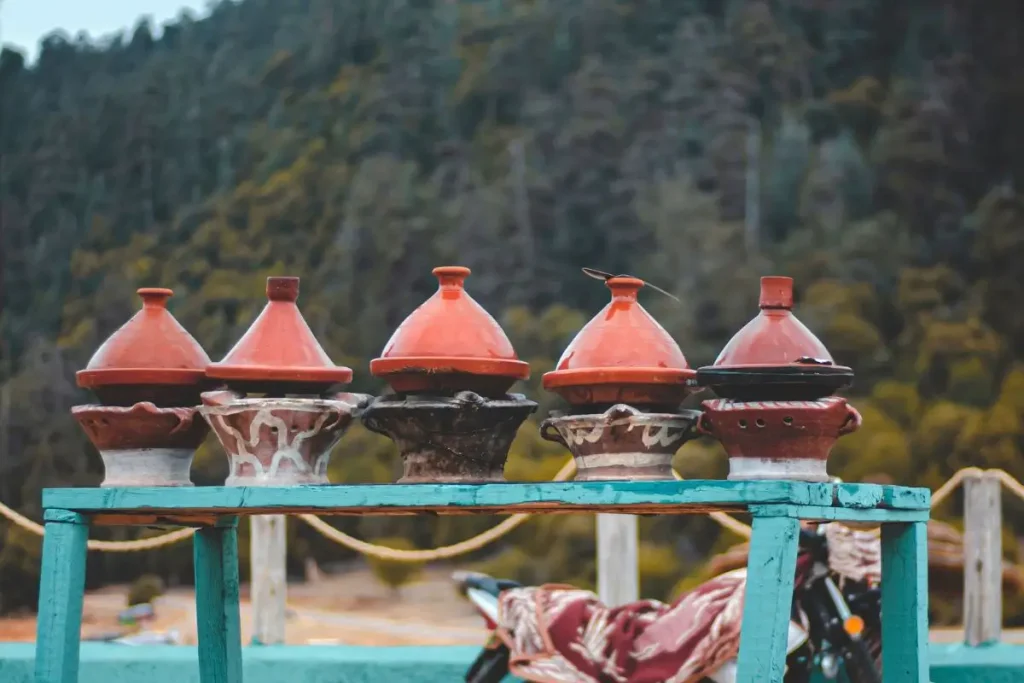
- Meals: $5–$10 for a solid tagine and mint tea at a local spot; $15–$25 for a nicer sit-down dinner
Where to Stay From authentic medina riads to desert camps, check available Morocco accommodations & desert camps here.
Tolls, Parking and Activities
Morocco’s toll highways (autoroutes) are inexpensive usually just a few dollars per stretch and worth using for long, direct hauls. Budget a small daily allowance for guided activities: camel treks, kasbah entry fees, hammam visits, and guided medina tours in Fes or Marrakech (highly recommended, since the medinas are genuinely easy to get lost in).
Step 4: Book Your Morocco Road Trip Essentials
Book Your Flights
Marrakech Menara Airport (RAK) and Casablanca Mohammed V (CMN) are the two main international gateways. Book flights first, since they anchor your start and end dates for the entire trip.
Flight Deals Find cheap direct flights to Marrakech or Casablanca by comparing rates on our recommended flight search tool here.
Choose a Rental Car
Book your rental car well in advance, especially during peak season (spring and fall). Compare local Moroccan agencies against international chains local agencies are often cheaper, but international brands can offer more consistent service and easier English-language support. Whichever you choose, photograph the car thoroughly at pickup.Rental Deal Compare top providers and book your rental car for Morocco here to secure the best rate and full insurance coverage.
Book Accommodation and Activities
Reserve accommodation check available Morocco accommodations & desert camps here. for at least your first and last nights before arrival, and for any desert camp experience, since popular Merzouga camps fill up. The rest of your route can be booked a few days ahead as your plans firm up, giving you flexibility if you fall behind or ahead of schedule.
Consider Travel Insurance
Travel insurance that covers rental car excess/damage and medical costs is worth the relatively small upfront cost, particularly given the mountain and desert driving involved. Check whether your rental agency’s basic insurance leaves a high deductible, since many budget options do.
Step 5: Create Your Morocco Road Trip Itinerary
Plan Each Driving Day
Map out each day’s drive distance and estimated time before you go, using a realistic average speed for mountain versus highway sections. Build a simple day-by-day skeleton: start point, end point, driving time, and one or two planned stops enough structure to stay on track without over-scheduling.
Choose Overnight Stops
Pick overnight bases that let you break up long drives naturally. Ouarzazate, Merzouga, and Dades Gorge are the classic waypoints on the southern route; Chefchaouen and Fes work well if your loop swings north.
Leave Time for Exploring
Resist the urge to fill every hour. Some of the best Morocco road trip moments happen in the unplanned half-hour a tea stop with a shopkeeper, an unmarked viewpoint, a detour down a road that looked interesting on the map. Build at least one buffer day into a 10+ day itinerary.
Step 6: Prepare Your Car and Packing List for a Morocco Road Trip
Download Offline Maps
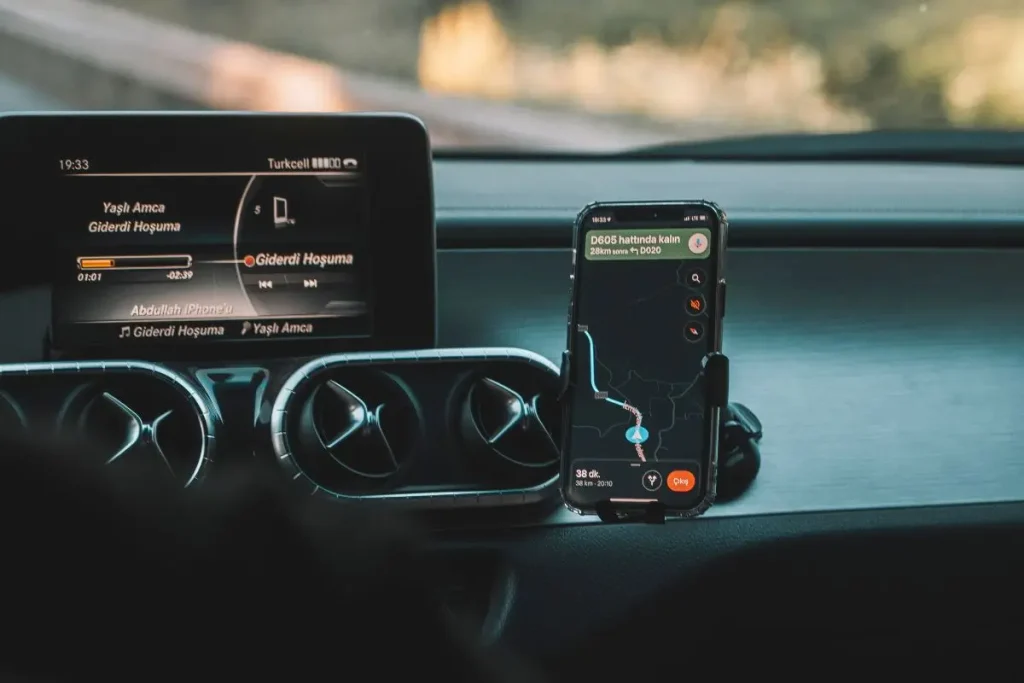
Cell coverage thins out in mountain and desert regions. Download offline maps (Google Maps offline or Maps.me) for your full route before you leave a city with reliable Wi-Fi.
Stay Connected Keep your GPS and maps running smoothly through mountain passes by getting a Morocco eSIM online here.
Pack Road Trip Essentials
- Physical printed reservations and route notes as backup
- A portable phone charger/power bank
- Cash in Moroccan dirhams (many rural stops and tolls don’t take cards)
- Layers temperature swings between desert, mountain, and coast are significant
- A basic first-aid kit
Prepare for Long Drives and Remote Areas
Fill up on fuel whenever you’re below half a tank, especially before entering mountain or desert stretches, since gas stations can be sparse. Keep a couple of liters of water and some snacks in the car at all times.
Step 7: Get Ready for Your Morocco Road Trip
Check Your Documents and Driving Requirements
Most visitors can drive in Morocco with a valid driver’s license from their home country, though an International Driving Permit (IDP) is recommended and sometimes requested by rental agencies. Keep your passport, license, and rental agreement together and accessible at all times police checkpoints on major routes are routine.
Check the Car Before You Leave
Before driving off the lot, check tire condition (including the spare), confirm the jack and tools are present, test lights and signals, and note the fuel level in writing on your rental agreement.
Save Important Numbers and Reservations
Save your rental agency’s roadside assistance number, your accommodation contacts, and your travel insurance emergency line in your phone and keep a written backup in case your phone dies.
Have a Backup Plan
Mountain passes can occasionally close due to weather, and desert routes can be affected by conditions underfoot. Know your route’s alternate roads in advance, and build a little slack into your schedule so a closure or delay doesn’t derail the whole trip.
Morocco Road Trip Planning FAQ
How Many Days Do You Need for a Morocco Road Trip?
Most travelers need at least 7–10 days to comfortably cover a classic loop that includes the Atlas Mountains, the Sahara, and one or two imperial cities without feeling rushed. A shorter 5-day trip works well if you focus on just one region, such as Marrakech and the nearby Atlas and desert gateway towns.
What Is the Best Route for a Morocco Road Trip?
The most popular route runs Marrakech → Ait Benhaddou → Dades/Todra Gorge → Merzouga (Sahara) → Fes, either continuing on to Chefchaouen or looping back to Marrakech. This route balances mountain scenery, desert experience, and historic medina cities without excessive backtracking.
Is a Morocco Road Trip Good for First-Time Visitors?
Yes Morocco is a solid choice for first-time self-drive travelers. Roads connecting major destinations are generally well-maintained, signage includes French and often English on major routes, and the country’s compact geography means big landscape changes without extreme distances. A little extra planning around mountain driving and rural fuel stops goes a long way.